



How Far From Plants Should a Grow Light Be?
Grow light distance is not a single fixed number. The correct mounting height depends on the light’s intensity at canopy level, the plant growth stage, canopy density, and how well the system can control output. If the light is too close, plants may show bleaching, leaf curl, dry edges, or heat stress. If it is too far, plants often stretch, grow slowly, and produce thinner canopies.
A practical way to set distance is to target a stable canopy-level intensity and then fine-tune using dimming and observation. AURG grow lights support adaptive spectrum control and intelligent dimming, which helps growers keep output consistent as plants grow. You can review options on the AURG products page.
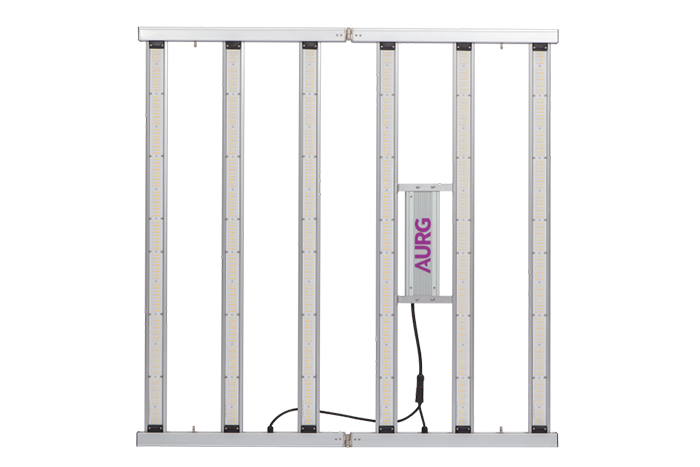
How Distance Changes What Plants Receive
Distance affects two things that matter in daily operation:
Intensity at the canopy: moving the fixture closer increases usable light reaching the leaves, while moving it farther reduces it.
Uniformity across the growing area: closer mounting often creates a brighter center and darker edges, while higher mounting can improve evenness if the fixture distribution supports it.
Because growers usually want both adequate intensity and consistent coverage, distance decisions are often a balance between maximizing PPFD and maintaining uniformity across the bed, bench, or rack.
Start With Stage-Based Distance Ranges
Different stages tolerate different intensity levels. Seedlings and clones usually need gentler light, while mature vegetative canopies and flowering crops can handle higher intensity when temperature and watering are controlled.
Use the ranges below as starting points, then adjust based on your canopy readings and plant response. If your light has dimming, use dimming first before making large height changes.
| Growth Stage | Typical Distance Range | Why This Range Works | What to Watch For |
|---|---|---|---|
| Seedlings / Clones | 30–60 cm / 12–24 in | Reduces stress while providing consistent early growth | Bleaching or curled edges means too close; stretching means too far |
| Vegetative Growth | 40–80 cm / 16–32 in | Supports leaf expansion and canopy building with better spread | Uneven canopy brightness suggests height or layout adjustment |
| Flowering / Fruiting | 50–100 cm / 20–40 in | Allows higher intensity while managing heat and uniformity | Top bleaching, taco leaves, or dry tips indicate excessive intensity or heat |
These ranges assume typical modern LED grow lights. The best setting is always the one that delivers the intensity your crop needs at the top of the canopy while keeping leaf temperature stable.
A Simple Method to Dial In the Right Distance
Instead of guessing, treat distance as part of a controlled setup process:
Use canopy-level readings, not fixture labels
Measure at the plant canopy, not near the light. If you use a PAR meter, take readings at multiple points across the grow area, including corners. A single center reading can hide poor uniformity.
Prioritize uniformity, then increase intensity
If the center is strong but corners are weak, lifting the fixture slightly often improves distribution. You can recover intensity by increasing output with dimming rather than lowering the light too close to the canopy.
Adjust gradually and observe plant response
Changes should be incremental. A large drop in distance can shock plants even if the spectrum is appropriate, because intensity can jump quickly. When intensity increases, plants may also need more water and nutrients to match faster growth.
AURG’s intelligent dimming helps this process because you can hold a consistent light distance and fine-tune intensity as the canopy develops, which reduces repeated hardware repositioning and makes outcomes more repeatable.
How to Know If the Light Is Too Close or Too Far
Distance problems show up in predictable ways. Checking these signs early helps prevent wasted time in the growth cycle.
Signs the grow light is too close
Leaf bleaching or lighter patches on top leaves
Leaf edges curling upward or “taco” shape
Dry tips or rapid surface dehydration
Reduced growth rate despite strong light output
These signs can also be influenced by temperature, humidity, and watering, so confirm that the environment is stable before concluding distance is the only issue.
Signs the grow light is too far
Stretched stems and wider internode spacing
Thin canopy with weaker side growth
Leaves angling strongly upward searching for light
Slower growth even when watering and nutrition are correct
If stretching happens early, increase intensity using dimming or lower the light slightly, then monitor for improved compact growth.
Distance and Heat Management in Real Grow Rooms
Even LED fixtures produce heat that can accumulate at the canopy. The risk is not only fixture heat but also increased leaf temperature due to stronger light intensity.
Practical heat-control actions that protect plants:
Ensure air movement across the canopy so leaf surfaces cool evenly
Avoid placing fixtures too close when plants are already under high temperature or low humidity conditions
Increase distance slightly if top leaves show heat stress, then restore intensity using dimming if needed
AURG’s focus on durable construction and controlled output helps growers maintain consistent performance in environments where temperature and humidity vary throughout the day.
Special Cases: Shelves, Racks, and High-Density Canopies
Vertical racks and low clearance
If clearance is limited, use shorter distances but control output carefully to avoid hot spots. In rack systems, uniformity is often improved by using stable distances and adjusting intensity through dimming rather than constantly changing fixture height.
Large commercial benches
For wide benches, height can improve uniformity across the footprint. If the edges are underlit, increasing height typically helps distribution, and then intensity can be increased to hit canopy targets.
Mixed plant heights
If plants vary in height, keep the light distance set to the tallest canopy and use staged height management or zoning. This prevents the tallest plants from receiving excessive intensity while trying to serve shorter plants.
Quick Reference: Common Distance Problems and Fixes
| Problem | What You See | Best First Adjustment | Next Adjustment |
|---|---|---|---|
| Light too intense at canopy | Bleaching, curl, dry edges | Increase distance slightly | Reduce output with dimming and stabilize environment |
| Uneven coverage | Bright center, weak edges | Raise fixture to improve spread | Re-map layout or add fixtures for uniformity |
| Stretching | Long internodes, thin canopy | Increase intensity | Decrease distance in small steps and recheck stress signs |
| Growth stalls after change | Slow growth after reposition | Return to previous setting | Make smaller distance changes and adjust intensity gradually |
Choosing a Grow Light That Makes Distance Easier to Manage
Distance control becomes much simpler when the light supports:
Stable output with smooth dimming control for gradual changes
Spectrum adjustment to align with vegetative or flowering stages without abrupt shifts
Reliable construction for long-term operation in humid or demanding grow environments
AURG designs grow lights with adaptive spectrum technology and intelligent dimming, which helps growers manage distance, intensity, and growth-stage transitions more precisely. For specifications and options, visit AURG products.
Conclusion
The right grow light distance is the one that delivers the intensity your plants need at the canopy while maintaining uniform coverage and stable leaf temperature. Use stage-based distance ranges as a starting point, verify with canopy-level readings across multiple points, and adjust gradually. A system with intelligent dimming and adaptable spectrum gives you more control, reduces repeated repositioning, and supports consistent results as plants grow. Explore AURG products to select a grow light that fits your setup and control requirements.