


Do Plant Lights Work?
Plant lights do work, but not every light can bring the same growing result. For greenhouse operators, indoor farm buyers, hydroponic project suppliers, and cultivation equipment distributors, the real question is not simply whether a grow light can turn on. The real question is whether the light can provide useful intensity, suitable spectrum, stable coverage, and acceptable energy cost for the crop plan.
Many buyers become disappointed because they choose lights only by wattage or appearance. A lamp may look bright to human eyes, but plants respond to usable light energy, lighting duration, distance, and canopy coverage. If these factors are not planned correctly, the grow room may still face slow growth, uneven plant size, weak flowering, or higher electricity cost without the expected output.
Plant Lights Work When The Light Matches The Crop
A grow light should be selected according to the crop stage, growing area, mounting height, and target production result. Seedlings, leafy greens, herbs, flowering plants, and fruiting crops do not always need the same light level. A small propagation area may need gentle and even coverage, while a commercial canopy may need higher output and stronger penetration.
For B2B buyers, this is where plant lights become a business decision. A low-output lamp may reduce the initial purchase cost, but it may not give enough usable light for commercial production. A poorly matched high-power lamp may increase electricity cost without improving plant uniformity. The best result comes from matching light output with the real growing plan.
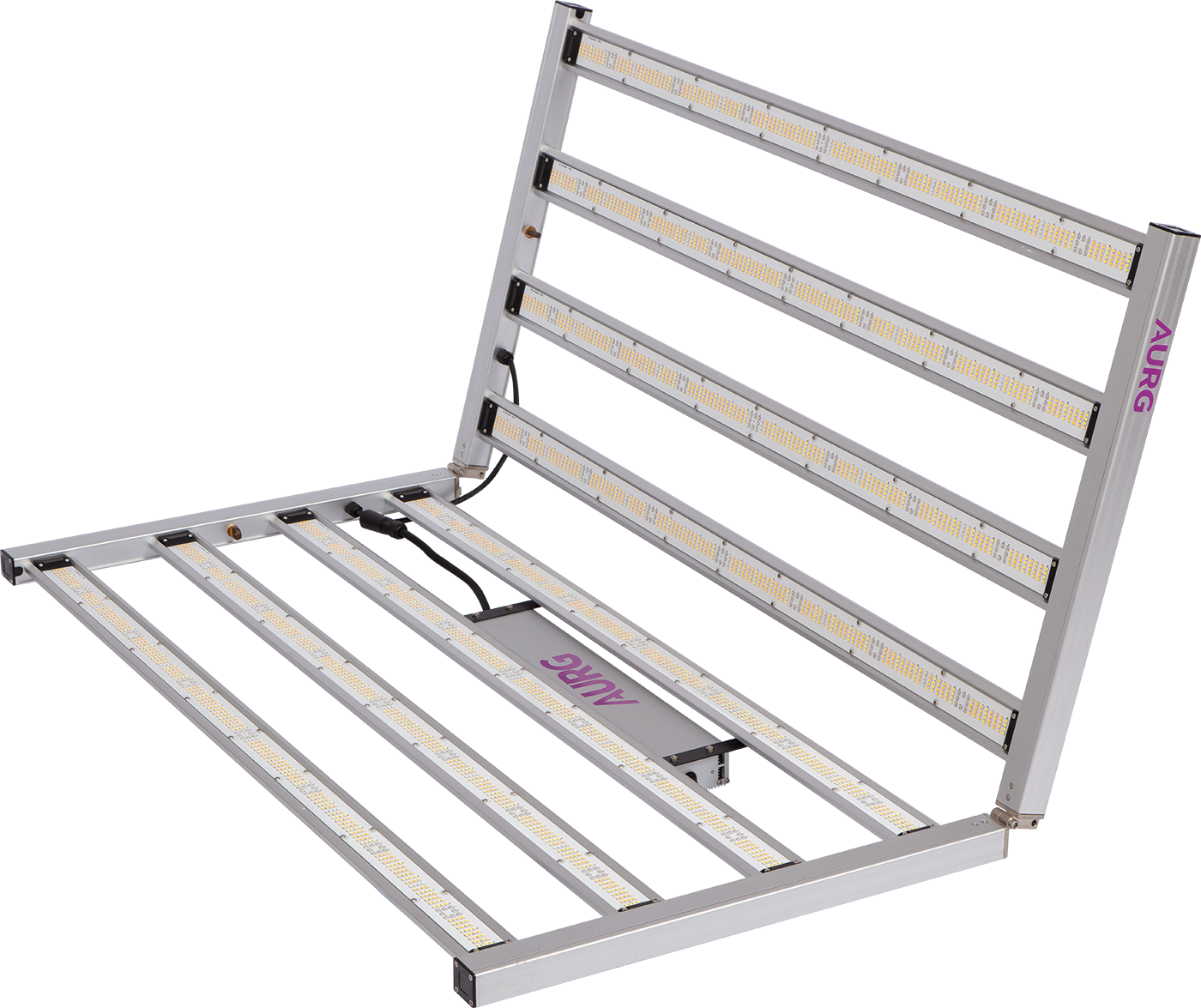
We are AURG, and our AG-800 is designed as an advanced grow lighting option with full spectrum output, 2400 µmol/s PPF, 3.0 µmol/J efficacy, and 800W input power. For cultivation buyers, these figures are useful because they help compare grow lights by plant-useful output, not only by how bright the lamp appears.
Brightness Alone Is Not Enough
A common mistake is judging plant lights by human visual brightness. Plants use light differently. They need enough photosynthetic light over the canopy, and that light must reach the right area with suitable uniformity. If the center is too strong but the edges are weak, crop growth may become uneven. If the lamp is mounted too far away, useful intensity may drop before reaching the plants.
This matters for indoor farms and greenhouse supplement lighting projects because uneven growth can create hidden cost. Plants may mature at different speeds, harvest planning becomes less predictable, and buyers may need more labor to sort or manage the crop.
A grow light should therefore be reviewed by actual growing layout. Buyers should check fixture spacing, hanging height, canopy size, growth stage, and whether the target crop needs long daily lighting or only supplemental light during low-sun periods.
Energy Cost Must Be Linked To Output
Plant lights can support growth, but energy use cannot be ignored. For commercial growers, electricity cost is part of production cost. A lamp that consumes power without giving enough usable light will increase operating pressure.
This is why efficacy matters in grow light purchasing. Efficacy shows how much plant-useful light output is produced per watt of electricity. A grow light with higher usable output per watt can help buyers plan the balance between growth performance and operating cost more clearly.
The AG-800 offers 3.0 µmol/J efficacy, which gives project buyers a more practical way to evaluate lighting investment. Instead of only asking whether plant lights work, growers can ask whether the light output, power use, and coverage area fit the production target.
Full Spectrum Helps Support More Growing Stages
Full spectrum grow lights are widely used because they provide a broader light profile for plant development. This can be useful when buyers need one lighting direction for different growth stages or mixed crop planning. It also helps cultivation teams avoid relying only on narrow-color lighting that may not suit every plant condition.
For distributors and project suppliers, this makes full spectrum lights easier to explain to buyers. The conversation can move away from simple color claims and focus on real growing requirements: crop type, lighting schedule, canopy size, and desired result.
AURG’s AG-800 uses full spectrum lighting, making it suitable for commercial cultivation buyers who want a more complete grow light direction for indoor and controlled-environment growing projects.
What Buyers Should Check Before Ordering
Before placing a grow light order, buyers should not only ask for price and wattage. They should review the growing area, crop type, target light intensity, mounting height, voltage requirement, heat management, power layout, and expected daily operating hours.
The AG-800 supports 100–277V input voltage, which gives buyers more flexibility for different project markets. This is useful for distributors and cultivation project suppliers working across regions with different electrical systems.
A practical grow light review should answer these questions:
What crop will be grown?
How large is the canopy area?
What mounting height is available?
How many hours will the light run daily?
Is the goal full indoor lighting or greenhouse supplemental lighting?
Can the power system support the required load?
Is the buyer comparing output efficiency, not only fixture price?
These checks help prevent the most common problem: buying a light that works electrically but does not fit the growing environment commercially.
Conclusion
Plant lights work when they are chosen and installed according to plant needs, not only by wattage or visual brightness. For commercial growers, indoor farms, greenhouse projects, and cultivation equipment distributors, the value of a grow light depends on usable output, spectrum, coverage, installation height, and energy efficiency.
If your buyers are unsure whether plant lights can improve their growing results, the first step is to review the crop plan and lighting layout. Share the growing area, crop type, mounting height, voltage requirement, and target use with us, and we can help check whether our AG-800 grow light is suitable for the project before the order is prepared.